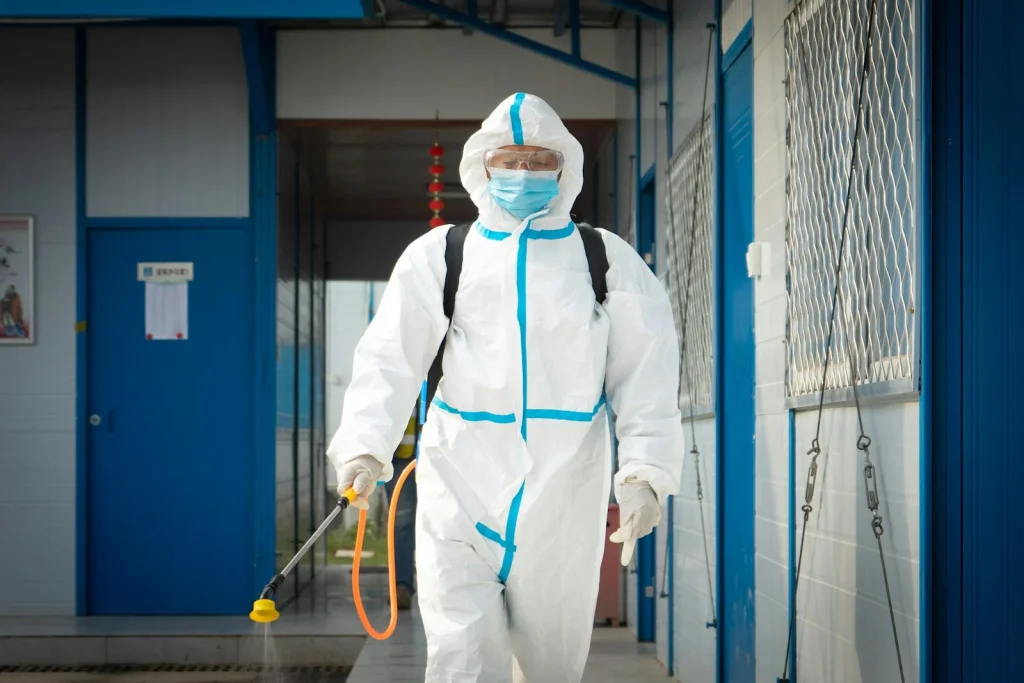
Hospitals carry a unique fumigation and disinfection challenge: the same environment that treats infection can also become a source of it if pest control and surface disinfection aren’t handled to a clinical standard.
Why General Pest Control Isn’t Enough
Standard commercial fumigation methods aren’t designed for environments with immunocompromised patients, sensitive equipment, and strict air quality requirements. Hospital fumigation needs to account for chemical safety around patients and staff, compatibility with medical equipment, and timing that doesn’t disrupt active clinical areas.
Key Areas of Risk
- Pest control: hospitals attract pests through food service areas, waste storage and general building traffic — left unmanaged, this becomes a vector for contamination.
- Surface disinfection: high-touch surfaces (door handles, bed rails, equipment controls) need regular, verified disinfection beyond routine cleaning.
- Air quality: disinfection protocols need to consider airborne transmission risk in wards, waiting areas and theatres, not just visible surfaces.
What Professional Hospital Disinfection Services Provide
1. Clinically Appropriate Chemical Selection
Disinfectants and pest control agents used in a hospital need to be effective against relevant pathogens while remaining safe around patients, staff and sensitive equipment — a balance that general-purpose products aren’t formulated for.
2. Scheduled, Documented Service
Regular fumigation and disinfection on a documented schedule, rather than ad-hoc response to visible problems, keeps risk consistently low instead of spiking between interventions.
3. Area-Specific Protocols
A theatre, an isolation ward and a general waiting area all carry different risk profiles and need different disinfection intensity and frequency — a one-size approach under-serves high-risk areas and over-treats low-risk ones.
4. Minimal Disruption to Operations
Professional services plan around a facility’s operating schedule, so fumigation and deep disinfection happen without shutting down active clinical areas unnecessarily.
Infection control is only as strong as its weakest surface — a single missed high-touch point undermines an otherwise thorough disinfection protocol.
Building It Into Facility Management
Fumigation and disinfection work best as part of a broader facility management plan, alongside waste management and general maintenance — treated as a standing operational requirement rather than a response to a visible problem.
Need Professional Facility Disinfection Support?
ROYGBIVE’s facility management and environmental services cover hospital-grade fumigation, disinfection and cleaning programmes.
Conclusion
Professional, clinically-appropriate fumigation and disinfection is a core infection-control requirement for hospitals, not a general cleaning add-on. Request a quote for facility disinfection services tailored to your institution.